A folding container house can serve for many years when it is manufactured with suitable materials, installed correctly, and maintained according to its operating environment. Its actual service life depends on several factors, including steel frame protection, panel quality, roof waterproofing, foundation conditions, humidity, temperature changes, and exposure to wind or salt air.
Climate plays an important role in determining how quickly a folding container house may experience corrosion, coating deterioration, water leakage, or insulation performance changes. A unit installed in a dry inland area may require a different maintenance strategy from one used in a tropical coastal region or a location with freezing winters.
For buyers planning construction camps, mining accommodation, workforce housing, and temporary offices, understanding these differences is essential before selecting a modular building.
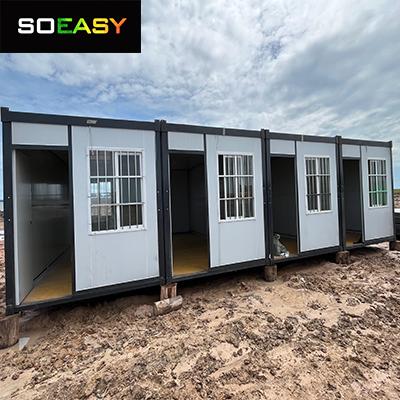
What Is the Typical Service Life of a Folding Container House?
There is no single lifespan that applies to every folding container house. A well-designed and properly maintained unit may remain in service for many years, while poor drainage, inadequate corrosion protection, harsh coastal exposure, or neglected roof maintenance can shorten its useful life.
SOEASY describes its Temporary Construction Dormitory Folding Container as a product designed for a 20+ year service-life target. This is a manufacturer-stated product positioning, not a guaranteed lifespan for every installation or climate.
Actual performance depends on the selected configuration, material specifications, installation quality, maintenance frequency, and local environmental conditions.
When evaluating a folding container house, buyers should look beyond the advertised service-life figure and check the materials and protective systems that influence long-term durability.
Which Components Have the Greatest Impact on Durability?
The service life of a folding container house is influenced by the performance of several connected components. A strong steel frame alone is not enough if the roof leaks or the lower structure remains exposed to standing water.
Steel Frame and Corrosion Protection
The steel frame carries the building loads and supports the folding structure. Galvanization, protective coatings, and suitable connection details help reduce corrosion, especially in humid or coastal environments.
Buyers should ask whether the structural steel is galvanized, how exposed joints are protected, and whether damaged coating areas can be repaired during maintenance.
Wall and Roof Sandwich Panels
Sandwich panels contribute to weather protection, thermal performance, and indoor comfort. Their durability depends on the panel core, outer and inner facing materials, joint sealing, and resistance to moisture.
For example, SOEASY's Temporary Construction Dormitory Folding Container uses 40mm IEPS sandwich panels according to its product information. Buyers should confirm the exact panel specifications, applicable fire performance documentation, and insulation requirements for their destination market.
Roof Waterproofing and Drainage
Roof joints, flashing, sealants, and drainage details are important in areas with frequent rainfall. Even a well-built steel structure can experience premature deterioration if water repeatedly enters panel connections or accumulates around the base.
Doors, Windows, and Folding Connections
Moving parts and connection points need regular inspection. Hinges, locks, seals, and folding joints may experience wear through repeated transportation, deployment, and relocation.
Foundation and Ground Clearance
A suitable foundation keeps the building level and helps reduce direct contact between the lower structure and wet ground. Poor site drainage can accelerate corrosion and create long-term maintenance problems.
How Does a Folding Container House Perform in Tropical and Humid Climates?
Tropical environments often combine high temperatures, frequent rainfall, high humidity, and strong sunlight. These conditions make moisture management and corrosion protection particularly important.
For a folding container house installed in Southeast Asia, tropical Africa, or other humid regions, buyers should pay attention to:
-
Corrosion protection on the steel frame and exposed metal components.
-
Sealing around roof connections, windows, doors, and panel joints.
-
Roof drainage capacity during heavy rainfall.
-
Ventilation and condensation control inside the building.
-
Protection of the lower frame against splashing water and prolonged dampness.
-
UV resistance of exterior coatings and exposed sealing materials.
High humidity does not automatically mean a short service life. The more important issue is whether moisture can remain trapped around steel connections, panel joints, and concealed structural areas.
For workforce accommodation projects, regular inspection after the rainy season is a practical way to identify coating damage, water ingress, and early signs of corrosion.
Can Folding Container Houses Withstand Coastal and Salty Environments?
Coastal environments are particularly challenging for steel structures because airborne salt can accelerate corrosion on exposed metal surfaces.
A folding container house used near the sea, on an island, or in a coastal industrial area may require a higher level of corrosion protection than a similar unit installed inland.
Before ordering, project owners should confirm:
-
Whether the steel frame has an appropriate galvanization or coating system.
-
Whether exposed fasteners and connection components have corrosion-resistant protection.
-
Whether the coating specification is suitable for the expected coastal exposure.
-
Whether roof edges, joints, and lower structural areas are protected against water retention.
-
How frequently the exterior should be inspected and cleaned.
Routine cleaning can help remove accumulated salt deposits. Any damaged paint or protective coating should be repaired using a compatible system rather than left exposed.
For long-term coastal accommodation projects, buyers should discuss the expected distance from the shoreline and local corrosion conditions with the manufacturer before confirming material specifications.
How Does Cold and Snowy Weather Affect Service Life?
Cold climates create different challenges. Repeated freezing and thawing, snow accumulation, ice formation, and temperature differences between indoor and outdoor surfaces can affect the building envelope.
In regions with freezing winters, buyers should consider the following factors:
Snow Load Capacity
Roof structures must be designed for the applicable local snow loads. Snow accumulation can create significant structural pressure, particularly where drifting occurs around neighboring buildings or roof edges.
Insulation Performance
Wall and roof insulation should be selected according to the local winter design temperatures and intended indoor use. Panel thickness alone does not establish the complete thermal performance of a building.
Condensation Control
Warm indoor air can create condensation when it meets cold surfaces. Appropriate insulation continuity, air sealing, and ventilation help reduce moisture accumulation inside walls and roof assemblies.
Foundation and Frost Protection
In areas with frost-susceptible soil, foundation design should account for local frost depth and ground movement. A poorly designed support system may experience seasonal displacement and cause alignment problems.
For cold-region projects, the manufacturer should confirm whether the selected folding container house configuration is suitable for the required snow, wind, and temperature conditions.
What About Hot and Dry Desert Climates?
Hot and dry regions may appear less demanding because they often have lower rainfall. However, intense solar radiation, high surface temperatures, dust, and large daily temperature fluctuations can still affect building performance.
For projects in the Middle East, North Africa, or other arid regions, buyers should consider:
-
UV resistance of exterior coatings, sealants, and exposed plastic components.
-
Insulation performance under high outdoor temperatures.
-
Roof heat protection and indoor temperature control.
-
Dust protection around doors, windows, and ventilation openings.
-
Thermal movement at panel joints and structural connections.
-
Air-conditioning capacity and ventilation requirements.
Good insulation and effective sealing can improve indoor comfort and reduce the cooling demand of the building. However, insulation specifications should be matched to the destination climate rather than selected only by panel thickness.
In dusty environments, regular cleaning of exterior surfaces and ventilation components can also help maintain building performance.
Folding Container House Durability in Different Climates: A Comparison
The following table summarizes the main environmental risks and maintenance priorities for different climate conditions.
|
Climate
|
Main Durability Risks
|
Recommended Focus
|
|
Tropical and humid
|
Corrosion, condensation, water leakage
|
Protective coatings, ventilation, drainage
|
|
Coastal and marine
|
Salt corrosion and coating deterioration
|
Enhanced corrosion protection and cleaning
|
|
Cold and snowy
|
Snow loads, frost movement, condensation
|
Roof engineering, insulation, frost protection
|
|
Hot and dry
|
UV exposure, heat, dust, thermal movement
|
UV-resistant coatings, insulation, sealing
|
|
Temperate
|
Seasonal moisture and temperature changes
|
Routine inspection and drainage maintenance
|
These are general environmental considerations rather than guaranteed lifespan predictions. Actual durability depends on the building specification, exposure severity, installation, and maintenance.
How Can Buyers Extend the Service Life of a Folding Container House?
Regular maintenance is one of the most practical ways to protect a folding container house. Small problems are generally easier and less expensive to correct before they develop into structural or water-ingress issues.
Inspect the Steel Frame
Check exposed steel surfaces, welded areas, connection points, and the lower frame for scratches, coating damage, and corrosion. Repair affected areas using the manufacturer's recommended protective system.
Check the Roof and Waterproofing
Inspect roof joints, sealants, flashing, and drainage outlets. Remove leaves, dust, and debris that may block water flow.
Maintain Panel Connections
Look for damaged panel edges, loose fasteners, deteriorated seals, and signs of moisture penetration. Early repairs can help prevent more extensive damage.
Keep the Foundation Area Dry
Maintain drainage around the building and prevent soil, vegetation, or stored materials from blocking airflow beneath the structure.
Inspect Folding Components
Check hinges, locking devices, and moving connections after transportation or repeated deployment. Follow the manufacturer's instructions when lubricating or replacing components.
Adapt Maintenance to Local Weather
Coastal buildings may need more frequent salt removal, while units in snowy regions require roof and drainage inspections before and after winter. Tropical installations should receive particular attention after heavy rainfall.
How Should Buyers Select a Folding Container House for Their Climate?
When purchasing a folding container house for an overseas project, the destination climate should be included in the technical specification from the beginning.
For example, SOEASY offers folding container house solutions for construction site accommodation, labor camps, and other temporary facilities.
Before choosing a model, buyers should provide the manufacturer with the following project information:
-
Destination country and installation location.
-
Expected summer and winter temperature ranges.
-
Annual rainfall and relative humidity, where available.
-
Whether the site is coastal, inland, mountainous, or desert-based.
-
Local wind speed and design snow load requirements.
-
Expected service period and whether the building will be relocated.
-
Intended occupancy, insulation, and ventilation requirements.
For projects requiring a different structural arrangement, a flat pack container house may also be considered. The appropriate solution depends on the building layout, transportation plan, installation conditions, and local engineering requirements.
SOEASY's Temporary Construction Dormitory Folding Container provides an example of a folding accommodation product using a galvanized steel frame and 40mm IEPS sandwich panels. Buyers should request detailed specifications and verify suitability for the intended climate before ordering.
Final Thoughts: Climate Compatibility Matters More Than a Lifespan Claim
A folding container house can provide long-term value across different climates, but its actual service life is determined by the relationship between material quality, environmental exposure, installation conditions, and maintenance.
Humid and coastal environments require particular attention to corrosion and waterproofing. Cold regions need suitable insulation, snow-load engineering, and frost-resistant foundations. Hot and dry areas require protection against UV exposure, heat, and dust.
For international construction and accommodation projects, buyers should communicate local climate conditions to the manufacturer before production. SOEASY focuses on folding container houses and other modular accommodation solutions, helping project owners select configurations according to their building requirements and installation environments.
Frequently Asked Questions About Folding Container House Lifespan
How long does a folding container house last?
The service life varies according to steel protection, panel quality, installation, climate, and maintenance. SOEASY describes one of its folding container house products as having a 20+ year service-life target, but actual performance depends on project conditions.
Can a folding container house last 20 years?
It can be designed and maintained for long-term use, but reaching a particular service-life target depends on material specifications, corrosion protection, foundation conditions, environmental exposure, and regular maintenance.
Are folding container houses suitable for tropical climates?
They can be suitable when the selected model has appropriate corrosion protection, waterproofing, drainage, ventilation, and insulation for the local conditions.
Do folding container houses rust in coastal areas?
Steel components can corrode faster in salt-rich coastal environments. Suitable galvanization, protective coatings, regular cleaning, and inspection help reduce this risk.
Can folding container houses be used in snowy regions?
Yes, provided that the building is specifically designed or verified for local snow loads, wind conditions, insulation requirements, and foundation conditions.
How does extreme heat affect a folding container house?
High temperatures and UV exposure can affect exterior coatings, sealants, and indoor comfort. Appropriate insulation, UV-resistant materials, and ventilation help improve performance.
What maintenance does a folding container house need?
Regular maintenance should include steel-frame inspections, coating repairs, roof and seal checks, drainage cleaning, panel inspections, and checks of folding connections and hardware.
Does moving a folding container house reduce its lifespan?
Repeated transportation and deployment can cause wear to hinges, connections, protective coatings, and structural components. Following the manufacturer's handling instructions and inspecting the building after relocation helps manage this risk.


 +8613902808995
 +86 13902808995
 siwenchen@chinawellcamp.com




 IPv6 rede suportada